
London Stories, Building Storytelling Skills
- Monday February 2nd 2026
- Topical Teaching, Activities & Teaching Ideas, KS1, KS2, KS3

If London were a book, what story would it tell? From its bustling streets and iconic landmarks to its hidden histories and quirky attractions, the capital is packed with inspiration for National Storytelling Week and beyond. Every corner, riverbank, and market stall offers a spark for imagination, giving your pupils endless opportunities to bring stories to life on the page, in speech, and on stage.
Have you thought about ways to weave London into your storytelling plans this week? Its rich history, unforgettable characters, and vibrant settings provide ready-made hooks for writing, drama, oracy, and cross-curricular learning—helping students explore perspective, structure, and creativity in ways that feel vivid, engaging, and unmistakably London.
Here are a few ideas for how London and some of its iconic attractions can become the ultimate storytelling companion for your pupils.
One Rotation, One Story
Inspired by the London Eye (KS2/KS3)
Take your pupils on a storytelling journey without leaving the classroom! A full rotation on the London Eye takes about 30 minutes—perfect for shaping a story with a clear beginning, middle, and end.
Get pupils imagining:
- Beginning: Step into the capsule. Who is there? What do they see, hear, or feel?
- Middle: Rise above the city. What do they notice, remember, or discover?
- End: Come back down. How has the character changed? What have they learned?
Why it sparks learning:
This simple structure helps students shape narrative arcs, develop descriptive writing, and explore character thoughts and feelings. It works equally well for a short writing exercise, a drama activity, or even an oral storytelling starter.

Oral Storytelling & Drama
Madame Tussauds London in Action (KS3)
Bring the wax figures of Madame Tussauds to life and turn the classroom into a stage. Students explore how storytelling can happen through voice, movement, and imagination.
Get pupils imagining:
Step into the role of a wax figure. Ask questions in a hot-seat, then answer in character. Create freeze-frame drama - strike a pose, then step out to narrate your character’s thoughts. Or perform a monologue from a figure witnessing the world change around them. Encourage expressive language, gestures, and emotion to make the story vivid.
Why it sparks learning:
Builds confidence, speaking, and performance skills while exploring narrative and perspective. Pupils practise thinking on their feet, developing empathy, and bringing characters to life—all in a flexible, fun activity that blends drama, storytelling, and oracy.
Telling Stories Without Words
Inspired by SEA LIFE London (KS2/KS3)
Dive into the colourful world of SEA LIFE and discover how stories can be told without speaking. Pupils explore how animals move, behave, and show emotions in their own “silent” ways.
Get pupils imagining:
Pretend to be a sea creature - a turtle, ray, or shark! Use movement, gestures, or colours to tell a story. You can also draw or write from the animal’s point of view, showing what it sees, feels, or does without using words. Encourage pupils to think about how actions can show feelings.
Why it sparks learning:
Builds observation, creativity, and show-not-tell skills, helping pupils understand emotions and behaviour. Great for drama, storytelling, or short writing tasks, this activity makes pupils think, move, and imagine like the animals around them.
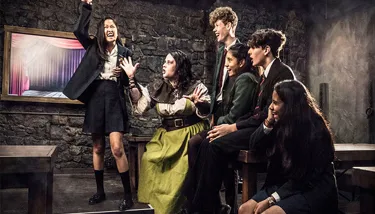
Theatrical Storytelling
Inspired by the London Dungeon (KS3)
Step into the dark, dramatic world of the London Dungeon and turn history into theatre. Pupils explore how performance, mood, and storytelling combine to engage an audience.
Get pupils imagining:
Pick a historical moment from London’s past and retell it as a dramatic monologue. Encourage the use of sound effects, lighting cues, or narration to build tension, humour, or fear. Experiment with timing, gestures, and voice to bring the story alive, and explore how contrasting emotions, like fear and humour, can make a story unforgettable.
Why it sparks learning:
Supports oral storytelling, drama, and performance skills. Pupils practise narrative structure, characterisation, and audience awareness, while exploring how mood and tone shape stories. Perfect for learners to build confidence, creativity, and dramatic flair in a curriculum-linked activity.
London as a Living Map
Inspired by the London Eye (KS1-3)
Take a bird’s-eye view of the city and turn London’s landmarks into storytelling sparks. Pupils explore how places can inspire stories, memories, and imagination.
Get pupils imagining:
Look at a famous London landmark and imagine what’s happening there. Encourage pupils to zoom in on one spot - it could be Big Ben, or a bustling street and create a mini-story or scene. They can connect personal experiences, memories, or invent adventures to these iconic locations. For younger pupils (KS1), simple drawings or short sentences work; older pupils (KS2–KS3) can expand into detailed narratives or diary-style entries.
Why it sparks learning:
Links geography and narrative, helping pupils think about place, perspective, and storytelling. Builds observation, imagination, and descriptive skills, while giving stories a real-world, unmistakably London context.

Subverting Fairy Tales
Inspired by Shrek’s Adventure! London (KS1/KS2)
Step into the messy, funny world of Shrek's Adventure! London and discover that stories don’t always follow the rules. Pupils can explore how heroes, villains, and endings can be surprising.
Get pupils imagining:
Take a familiar fairy tale and twist it - maybe the villain isn’t all bad, the hero makes mistakes, or the ending isn’t what everyone expects. Pupils can rewrite the story, act out a scene, or tell it aloud with their own funny or surprising ideas. Encourage creativity, humour, and alternative perspectives.
Why it sparks learning:
Helps pupils practise narrative skills, character understanding, and creative thinking. They learn that stories can be flexible, playful, and imaginative, while building writing, storytelling, and drama confidence. Perfect for making familiar tales fresh and engaging.
Madame Tussaud’s Own Story - Bringing Biography to Life
Inspired by Madame Tussauds London (KS2/KS3)
Step into the shoes of Marie Tussaud and turn history into story. Pupils explore her journey as a young apprentice, living through the French Revolution, and preserving faces, and stories, for the future.
Get pupils imagining:
Invite pupils to pick a moment from Marie’s life that sparks their imagination. They can write a short story, create a diary entry, or perform a mini-monologue, exploring her thoughts, feelings, and choices. Add dialogue, description, or even a “wax figure interview” for extra fun.
Why it sparks learning:
Transforms history into hands-on storytelling. Pupils practise narrative skills, build empathy, and explore resilience—all while linking to history and PSHE. Flexible enough for writing, drama, or oracy, it gives classrooms a quick, inspiring way to make stories feel alive, personal, and memorable.
Related Posts
The cultural capital
Using London as a lens for learning can help bring abstract concepts to life and leave students feeling connected to the world around them.
Read more
London, the ultimate living classroom
With its unparalleled mix of history, culture and community, the UK’s vibrant capital city creates a learning resource like no other.
Read more
10 top tips for planning the ultimate school trip in London
London offers endless itineraries to suit any learning objective. But with so much to choose from and to think about, how can you go about booking the ultimate school trip?
Read more
How London can spark cross-curricular learning in KS2
With its breadth of history, diversity and cultural capital, London can be an invaluable resource for KS2 teachers looking to excite students with a cross-curricular theme.
Read more