
Six ways to connect core KS2 objectives with a trip aboard the London Eye
- Tuesday April 28th 2026
- Lesson Planning, School Trip, KS2
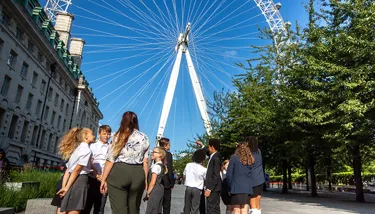
The best school trips are about far more than a break from the classroom.
For KS2 students, they offer an immersive way to learn about the world and its diverse cultures, communities and languages; they can bring to life abstract concepts; and broaden social horizons and cultural capital.
And at The London Eye we’re passionate about providing the perfect, complementary setting to any London itinerary.
Climbing aboard one of our 32 pods can leave students with so much more than an unmatched view of the UK capital and its iconic skyline.
Our The London Classroom platform is brimming over with resources for teachers to enrich each rotation and create a customised programme of learning for classes both before and after their school trip, including Creative Pod Plans designed with 7-11 year-olds in mind.
Here are six teaching ideas for combining a trip aboard The London Eye with a core KS2 objective - turning your next school trip into something truly memorable.
1. A look at London’s famous landmarks
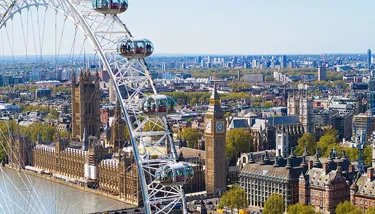
As a starter activity, in the days and weeks leading up to a school trip, introduce students to the famous landmarks visible from the London Eye’s 135-meter-tall observation wheel, from the Houses of Parliament to Westminster Abbey and Buckingham Palace.
Encourage them to understand what role each plays in the city, and its human and physical characteristics, ticking off a number of KS2 Geography objectives in the process.
Then once they’re aboard the pod, challenge them to put that knowledge to the test using our Matching The London Skyline quiz – a great visual exercise that will bring to the fore what they’ve learned in the lead-up.
You could even encourage them to sketch what they see or map out their first impressions using our London Inspiration Circle too.
2.Tour guide for the day
For a great multi-subject mix of critical thinking, independent research and persuasive speaking, challenge your KS2 students to think of themselves as tour guides.
Assign small groups or pairs a different landmark or tourist attraction.
Allow them time to head off and find out all they can discover about its history, geography and cultural significance – as well as what makes it such a draw for the city’s millions of visitors.
Ask them to turn their findings into a creative multimedia project using our London Travel Brochure template – a blend of persuasive writing and design.
Then, once safely aboard the pod, they’ve got 2-3 minutes per group to make their pitch: why should their classmates visit their chosen attraction?
For a high-energy plenary activity, take a quick vote as they approach the highest point – then let them enjoy their view.
3. Building a greener city
With an understanding of climate change now a core part of the KS2 curriculum, consider designing your London school trip through a sustainability lens – with The London Eye a great starting point.
On a clear day, visibility from your pod will stretch 40km (25 miles) in all directions, providing students a unique perspective on just how interconnected the city’s carbon footprint is, from the Thames that snakes through 13 boroughs to the fumes that rise up from queuing traffic.
Use our Energy Efficient Landmarks activity to provide students an eye-opening overview on what steps various attractions are taking to reduce their own environmental impact as they rotate slowly around.
Encourage debate. Are they doing enough? What further steps could they take to become more sustainable?
Post-trip, put these ideas to paper, with students designing their own environmental plan or writing a letter to explain their ideas to the London Mayor.

4. London: then & now
Even in the 25 years since The London Eye was built, the London skyline has undergone some huge changes.
Exploring this can be a great way to engage KS2 students in changing Britain over time, nudging them toward the connections, contracts and trends that are a key part of the KS2 History curriculum.
Use our The Changing London Skyline template to plot how the view from The London Eye has changed, putting each major building in chronological order from when it was built, and sketching out its shape and architecture.
Once back in the classroom, encourage students to compare and contrast with the changes in their own local community – be it residential buildings, leisure centres, schools or factories – and discuss what impact these have had on both residents and visitors alike.
5. Building London’s bridges
Did you know that you can spot at least five major bridges from The London Eye? Each with their own unique architectural style.
There’s the elegant Westminster Bridge, with its seven elliptical cast-iron arches (designed to complement the nearby Palace of Westminster); the contemporary, cable-stayed pedestrian Golden Jubilee Bridges; and, on a clear day, the turrets, towers and pointed arches of Tower Bridge coming into view as you reach the highest point of your journey.
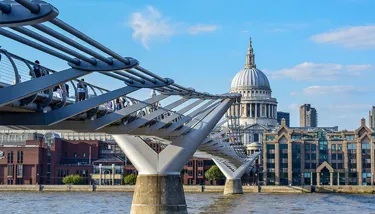
Get students talking about these critical points of connection– and testing out skills in both Art & Design, as well as critical thinking – aboard their pod using our London Bridge activity, which encourages them to identify each bridge and reflect on its design.
Then, before that all that post-trip excitement dissipates, challenge students to get really creative and design their own bridge in the classroom using whatever materials they have to hand.
6. Meet the Londoners
There’s a reason London is known as a cultural melting pot.
Our nearly nine million residents, come from different religions, backgrounds and ethnicities, all contributing to a unique cultural richness – the perfect backdrop for KS2 students looking to understand more about the diversity of societies and identities, a core KS2 History learning objective.
To lay the groundwork, download our London Borough Map prior to your arrival, a chance to name and label London’s 32 different boroughs, each with their own characteristics and communities.
Once on board The London Eye, see with what detail students can map out this geography and relay what they’ve learned about the city’s different areas.
Follow-up with a guided walking tour of a particular neighbourhood or area (Shoreditch & Spitalfields, Southbank or Notting Hill can be good options) to go into greater depth and really bring what students have discovered to life.
When it comes to amplifying KS2 learning objectives via a London school trip, the possibilities really are endless – and The London Eye the pinnacle of any itinerary.
Related Posts

London, the ultimate living classroom
With its unparalleled mix of history, culture and community, the UK’s vibrant capital city creates a learning resource like no other.
Read more
How London can spark cross-curricular learning in KS2
With its breadth of history, diversity and cultural capital, London can be an invaluable resource for KS2 teachers looking to excite students with a cross-curricular theme.
Read more
Tap into Camden: a curriculum rooted in culture, creativity and place
Discover the power of place through London Borough of Camden - where history, creativity, diversity and urban life create rich, connected curriculum opportunities that spark curiosity, critical thinking and belonging.
Read more
10 top tips for planning the ultimate school trip in London
London offers endless itineraries to suit any learning objective. But with so much to choose from and to think about, how can you go about booking the ultimate school trip?
Read more