
Tap into Camden: a curriculum rooted in culture, creativity and place
- Wednesday February 25th 2026
- London Boroughs, Activities & Teaching Ideas, KS2, KS3
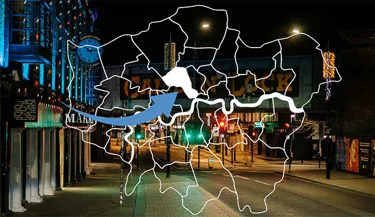
The London Borough of Camden offers a powerful context for curriculum learning across subjects:
- In English, its poets, musicians, and storytellers spark rich reading, writing, and speaking opportunities.
- History has witnessed social change, protests, and cultural movements that have shaped modern Britain.
- Through canals, markets, and communities, Geography lessons spark curiosity about urban life, migration, and sustainability.
- The Arts flourish through Camden’s vibrant music, performance, and visual culture.
- PSHE and Citizenship gain depth through real stories of identity, diversity, and belonging.
In short, Camden gives you a ready-made, multi-dimensional lens for learning, across subjects, across ages.
Like a lot of London, by teaching through Camden, pupils connect knowledge to the world around them, developing curiosity, critical thinking and a strong sense of place.
Has Camden captured your attention? Curious how this vibrant borough could shape your lessons? Scroll on…
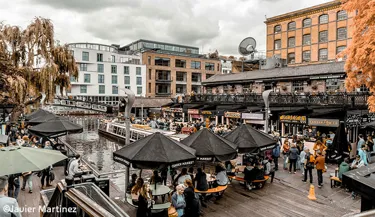
Camden: One Place, Many Communities (KS2/KS3)
Learning Objective:
- To understand that places are made up of different communities
- To explore how human activity (tourism) affects local people
- To recognise that people experience the same place in different ways
Starter Questions:
- Is Camden one borough or many different communities? What makes you think that?
- What places in Camden do people feel most proud of — and why?
- How does living in a tourist area affect the people who live there?
Starter (10 minutes): Locating Camden
Begin by showing pupils a map of London with borough boundaries and guide them to locate Camden and its neighbouring boroughs. Zoom in on key places such as Camden Market, Hampstead Heath, and local transport hubs. To help students reflect, use a Think–Pair–Share: first, have them think individually about what they notice - how is Camden used, and where do people gather or live? Next, let them discuss their ideas with a partner before sharing their observations with the whole class.
Main Activity (35 minutes) – Exploring Camden’s Communities
Part 1: Who Uses Camden? (15 mins)
Start by thinking about Camden’s streets, markets, parks, music venues, schools, and housing areas. In small groups, using place cards, explore:
- Who uses this place?
- What happens here?
- Why do people value it?
Groups to then share their ideas, building a simple class chart:
Place → People → Use → Importance.
Camden quickly becomes a living classroom, showing how one borough can be home to many communities.
Part 2: Different Perspectives & Impact (20 mins)
Next, dive deeper: how might different people experience the same place differently? How does tourism or human activity affect local communities?
In the same groups, pupils consider:
- Who benefits from each place?
- Who might face challenges?
- How could human activity change it?
Add their ideas to the class chart:
Place → People → Use → Importance → Impact.
Finish with a discussion: How can communities and visitors share Camden in ways that keep it special for everyone?
| Teaching Benefit | Quick Take for Your Classroom |
| Cross-Curricular Links | Connects to History, PSHE, and English through social change, diversity and storytelling. |
| Critical Thinking | Show how different people experience the same place, building empathy and reasoning. |
| Hands-On-Learning | Maps, place cards, and group discussions make lessons interactive and memorable. |
| Flexible for All Ages | Simple for KS2; deeper questions for KS3 on urban life, migration, and sustainability. |
| Local Meets Global | Students link Camden to wider ideas, brining the classroom to life. |
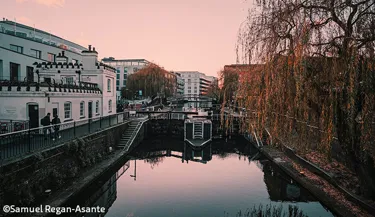
Camden Through Time: Railways, Canals, and Change (KS2/KS3)
Learning Objectives:
- Understand how transport (railways, canals) shaped Camden and its communities.
- Consider who benefited from urban growth and who might have been disadvantaged.
- Evaluate the importance of preserving historic buildings versus meeting modern housing needs.
- Explore Camden as a case study of London’s growth during the Industrial Revolution.
Starter Questions:
- How did the arrival of the railways and canals change Camden
- Who benefited most?
- Should historic buildings always be protected, even if new housing is needed?
- What can Camden tell us about how London grew during the Industrial Revolution?
Starter (10 mins): Mapping Camden’s Change
Begin by showing pupils a map of Camden from the 1800s alongside a modern map. Ask them to notice where the railways and canals were built and which areas became hubs for work, trade, or housing. Then, in a quick Think–Pair–Share, get them to consider: How might these changes have affected different people? Who benefited most from the new transport links?
Main Activity (35 mins)
Part 1: Camden Then & Now (15 mins)
Split the class into small groups and give each group image cards or mini fact sheets showing Camden’s 19th-century landmarks, transport hubs, markets, and factories. Ask pupils to discuss:
- What do these places tell us about life in Camden during the Industrial Revolution?
- Who worked or lived here, and who might have been left out of the benefits?
- How did canals and railways change trade, housing, and daily life?
Groups then share their findings, and the teacher can build a timeline or table to summarise:
Event/Change → Who Benefited → Who Was Affected.
Part 2: Preserving the Past vs. Planning for the Future (20 mins)
Next, introduce a few historic Camden buildings (old factories, markets, churches) that faced redevelopment. Pose the question: “Should historic buildings always be protected, even if new housing is needed?”
In small groups, pupils discuss and note:
- Arguments for protecting historic buildings
- Arguments for redeveloping or modernising spaces
- Possible compromises
Groups can present their ideas in a mini-debate or short report.
Wrap-Up Discussion:
Finally, bring the class together to reflect:
- What can Camden teach us about how London grew during the Industrial Revolution?
- How do transport, housing, and preservation decisions still affect cities today?
This activity turns Camden into a living history classroom, helping pupils understand how cities evolve, who benefits from change, and why preserving the past matters - even in a modern world.
| Teaching Benefit | Quick Take for Your Classroom |
| Curriculum-linked History | Explores the Industrial Revolution, urban growth, and the impact of railways and canals - perfect for KS2/KS3 History objectives. |
| Understanding Change & Perspective | Pupils consider who benefited from transport and development, who was disadvantage, and how communities evolved over time. |
| Critical Thinking & Debate | Discussing preservation vs. redevelopment builds evaluation, reasoning, and persuasive skills. |
| Hands-On, Visual Learning | Maps, historic images, and group discussions make history tangible and engaging |
| Flexible for Different Ages | Simplified discussion for KS2; deeper analysis, debate and historical interpretation for KS3. |
| Connects Past and Present | Pupils link Camden's Industrial Revolution history to modern urban planning, transport, and housing issues. |
Camden Speaks Through Music (KS2/KS3)
Learning Outcomes:
By the end of this lesson, pupils will be able to:
- Explain how Camden’s music scene reflects the borough’s identity and culture.
- Analyse how music can represent a place in the same way a character represents an idea.
- Create their own musical or written response to express what Camden might “say” through music.
Starter Questions
- How does Camden’s music scene give the borough a “voice”
- Can music represent a place in the same way a character represents an idea?
- If Camden could speak through music, what would it say?
Starter (10 minutes): Listening to Camden’s Voice
Introduce pupils to Camden’s vibrant music scene, live venues, street performers, and famous local musicians. Play short clips of iconic Camden-inspired songs or performances and encourage pupils to listen carefully. Use a Think–Pair–Share: first, pupils think individually about how the music makes them feel and what it might “say” about Camden. Then, they discuss with a partner: Can music represent a place in the same way a character represents an idea? Finally, invite pairs to share insights with the class. This starter gets pupils thinking about Camden’s identity through sound and sets up creative exploration.
Main Activity (35 minutes)
Part 1: Mapping Music to Place (15 minutes)
In small groups, give pupils images, short texts, or audio clips of Camden venues, street performances, and famous local musicians.
Ask them to discuss:
- How does this music reflect the people, culture, or history of Camden?
- Which locations or events are most strongly connected to the borough’s “voice”?
- If Camden were a character, what would this music tell us about it?
Groups then create a simple chart or mind map linking Location → Music → Message/Feeling → Identity to visualise how sound tells a story about place.
Part 2: Camden Speaks Through Music (20 minutes)
Next, challenge pupils to become Camden’s “voice.” In the same groups, they can:
- Write short lyrics, a poem, or a spoken word piece inspired by Camden’s music and atmosphere
- Select or suggest a track that they feel represents the borough today
- Reflect: If Camden could speak through music, what would it say?
Groups perform or share their creations with the class, highlighting how music can capture place, mood, and identity.
Wrap-Up Discussion:
- How does music give a place personality?
- Can you think of other places you know that have a “voice” through music?
- How do history, culture, and community shape the sounds of a place?
| Teaching Benefit | Quick Take for Your Classroom |
| Curriculum-lined Music & Arts | Explores how music reflects culture, identity, and place - perfect for KS2/KS3 music, drama, or cross-curricular projects. |
| Understanding Place & Identity | Shows pupils that Camden has a 'voice' through its music, helping them connect sound to community, history and character. |
| Creative Thinking & Expression | Encourages song-writing, poetry, or performance, building creativity and confidence in expressing ideas. |
| Critical Listening & Discussion | Think-Pair-Share encourages reflection on how music represents people, culture, and history. |
| Hands-on, Collaborative Learning | Small-group work and performances make lessons active, engaging and social. |
Stay inspired and bring London’s stories into your classroom - subscribe to be kept informed of fresh ideas and insights for teaching through the lens of the city’s vibrant boroughs.
Subscribe to the London ClassroomRelated Posts

The cultural capital
Using London as a lens for learning can help bring abstract concepts to life and leave students feeling connected to the world around them.
Read more
10 top tips for planning the ultimate school trip in London
London offers endless itineraries to suit any learning objective. But with so much to choose from and to think about, how can you go about booking the ultimate school trip?
Read more
How London can spark cross-curricular learning in KS2
With its breadth of history, diversity and cultural capital, London can be an invaluable resource for KS2 teachers looking to excite students with a cross-curricular theme.
Read more
London Stories, Building Storytelling Skills
If London were a book, what story would it tell? From its bustling streets and iconic landmarks to its hidden histories and quirky attractions, the capital is packed with inspiration for National Storytelling Week and beyond.
Read more